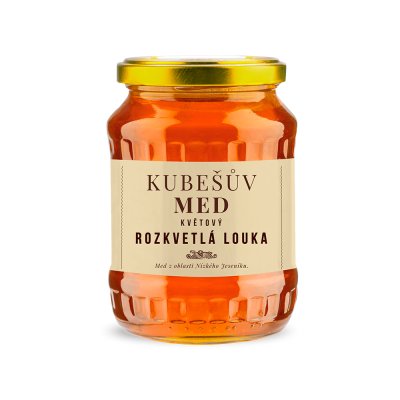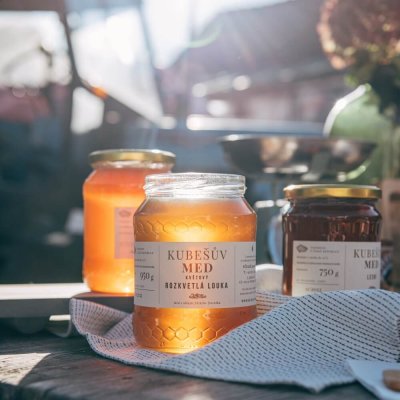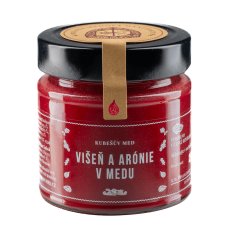
Discover the magic of the first honeymoon in every glass! The honey "Rozkvetlá louka" from the Kubeš Honey Manufactory will transport you to the magical landscape of the Low Jeseník. Every spoonful of this honey hides the scent of a variety of flowers - from the first dandelions to tender hollyhocks to willows and blossoming fruit trees. The careful work of the bees and the pure natural environment give rise to a honey with a delicate floral flavour that is as delicious as a spring morning in a meadow in bloom.
Flower honey crystallises naturally. When the honey is liquefied, it should not be heated to more than 45-50 °C to avoid losing its valuable substances.
Usage:
- a natural sweetener that can replace conventional sugar
- in baking dough - gingerbread, cakes and biscuits
- perfect for marinades for meat or salad dressings, where it enhances the flavour of other ingredients
How to prevent crystallisation?
Crystallization, or 'sugaring', is a natural property of honeys. Regardless of its origin, almost all honeys, except for paste honey, crystallise sooner or later. Floral honeys crystallise faster, honeydew honeys crystallise more slowly. Crystallization may be a defect of beauty, but not of quality. You can slow it down with proper storage. Honey should be stored between 15-20°C (15-20°F); it crystallizes faster at lower temperatures. Honey also does not like light, always store it in a dark place, ideally in a pantry. You can easily liquefy solidified honey by gently heating the honey in a water bath or in an oven preheated to a maximum of 50 °C.
Country of origin: Czech Republic
Discover the magic of the first honeymoon in every glass! The honey "Rozkvetlá louka" from the Kubeš Honey Manufactory will transport you to the magical landscape of the Low Jeseník. Every spoonful of this honey hides the scent of a variety of…
Více informací
Discover the magic of the first honeymoon in every glass! The honey "Rozkvetlá louka" from the Kubeš Honey Manufactory will transport you to the magical landscape of the Low Jeseník. Every spoonful of this honey hides the scent of a variety of flowers - from the first dandelions to tender hollyhocks to willows and blossoming fruit trees. The careful work of the bees and the pure natural environment give rise to a honey with a delicate floral flavour that is as delicious as a spring morning in a meadow in bloom.
Flower honey crystallises naturally. When the honey is liquefied, it should not be heated to more than 45-50 °C to avoid losing its valuable substances.
Usage:
- a natural sweetener that can replace conventional sugar
- in baking dough - gingerbread, cakes and biscuits
- perfect for marinades for meat or salad dressings, where it enhances the flavour of other ingredients
How to prevent crystallisation?
Crystallization, or 'sugaring', is a natural property of honeys. Regardless of its origin, almost all honeys, except for paste honey, crystallise sooner or later. Floral honeys crystallise faster, honeydew honeys crystallise more slowly. Crystallization may be a defect of beauty, but not of quality. You can slow it down with proper storage. Honey should be stored between 15-20°C (15-20°F); it crystallizes faster at lower temperatures. Honey also does not like light, always store it in a dark place, ideally in a pantry. You can easily liquefy solidified honey by gently heating the honey in a water bath or in an oven preheated to a maximum of 50 °C.
Country of origin: Czech Republic
DANIELA HLADKÁ